Software Development Leads: Why Recognition Beats Volume
Most dev agencies chase software development leads with a model built for volume, not fit. Here is the recognition-first approach that changes which accounts respond, and why the order matters.
Most software development leads are fake progress. The activity looks healthy. Emails go out, meetings get booked, and the pipeline board fills up. Then close rates stay soft, senior engineers get pulled into bad-fit scoping calls, and the founder wonders why the model keeps breaking.
It breaks because the bottleneck is buyer confidence, not contact volume.
Across 2 million B2B cold emails analyzed by Sales.co in 2026, the average interested reply rate was 0.64%, roughly 1 in 157 contacts showing genuine interest. For a software development agency selling complex, long-cycle engagements, those odds get worse. Technical buyers do not hand delivery risk to the vendor that emailed first. They shortlist the firm they already recognize in a narrow problem space.
The fix is a different model, and it starts with recognition. Pick a niche you can win, build visible authority where technical buyers evaluate vendors, then activate outbound against accounts that already have context for who you are.
The Volume-Based Lead Generation Model Is Broken
The default agency playbook treats software development leads like a throughput problem: buy a bigger list, push more cold email, and book meetings fast enough to hide weak fit.
That fails in technical sales because buyer confidence is the real constraint.
A software development deal carries delivery risk, architecture risk, political risk, and budget scrutiny. Technical buyers do not shortlist the vendor with the fastest cadence. They shortlist the firm they already know: the one that keeps showing up in their problem space with evidence that it understands the work.
Volume-first outreach produces fake efficiency. SDR activity, meeting count, and forecast noise all go up. Close rates stay soft because the agency never earned the right to have the conversation.
Why the math breaks in dev sales
High-consideration services punish generic outreach. A buyer evaluating a platform rebuild, compliance-heavy integration, or legacy migration is not looking for another full-service shop with broad claims and thin proof. They want a team that has already demonstrated pattern recognition in their exact environment.
The cost shows up across the whole revenue system.
| Failure point | What the volume model does | What actually happens in a dev agency |
|---|---|---|
| Pipeline target | Rewards raw lead and meeting count | Sales accepts weak-fit accounts to protect activity goals |
| Messaging | Uses broad service language | Technical buyers see no category expertise and ignore the pitch |
| Qualification | Pushes hard questions later | Bad-fit deals survive into solutioning and waste senior time |
| Forecasting | Treats booked calls as momentum | Pipeline inflates, then slips when real buying criteria appear |
| Team impact | Adds more outbound volume | AEs, architects, and delivery leads get pulled into low-probability work |
This is an operating model problem as much as a sales problem. Generic positioning means outbound has to work harder. Harder outbound means looser qualification, and looser qualification means delivery inherits deals with unclear requirements and low trust.
Recognition beats reach
Agencies that win technical buyers do one thing differently. They build recognition before activation. Choose a market narrow enough to own. Publish proof that maps to the buyer’s actual risk. Show up where evaluation now happens: search results, AI-generated vendor recommendations, community mentions, partner ecosystems, and peer referrals.
Recognition changes outbound economics. A cold message from an unknown generalist competes with every other agency pitch. A message from a firm the buyer has already seen attached to a specific problem gets read and answered at a higher rate because context already exists.
Use a simple rule. If your sales team cannot answer these three questions in one minute, your lead engine is still volume-first:
- Which narrow buyer situation do we win?
- What proof do we have in that situation?
- Why should a technical team trust us with delivery risk?
If the answer sounds like “custom software for startups and enterprises,” you do not have positioning. You have a brochure.
The replacement model
A recognition-first system starts earlier and converts better. Pick a niche with recurring pain and budget. Publish evidence that you understand that niche at a technical and business level. Identify accounts already showing signals of change, pressure, or active demand. Then run outbound only after the account has a reason to care and a reason to believe.
Across 1,700-plus agencies we have scanned, the healthiest pipelines belong to the firms that create familiarity in a tight market and then activate intent with precise outreach, rather than the firms generating the most names.
Stop treating software development leads as a list-building exercise. Build recognition first, then convert demand that already has shape.
Where to Source High-Value Development Leads
Your next strong client usually starts as a signal, not as a cold name in a giant list: a hiring pattern, a stack change, a compliance problem, or a product launch that creates delivery pressure. Good software development leads come from environments where those signals appear early.
Most agencies overinvest in LinkedIn and underinvest in research.
Source leads from situations, not databases
A useful lead source gives you more than contact data. It gives you context for why the account might move now. Buyer research matters more than brute-force prospecting. If your team needs a practical way to structure account research, this guide to target account management covers how to build a segmentation and prioritization model that actually sticks.
Use lead sources in tiers. Not every source scales the same way, and not every source deserves the same sales motion.
| Lead Source | Signal Quality | Scalability | Cost and Effort |
|---|---|---|---|
| Niche job postings | High when role demand matches your service line | Moderate | Moderate research effort |
| Conference speaker and attendee lists | High in narrow technical markets | Low to moderate | Manual work, high relevance |
| Open-source contributor activity | High for engineering-led companies | Low | High interpretation effort |
| Product release notes and changelogs | Moderate to high | Moderate | Ongoing monitoring required |
| Review sites showing vendor dissatisfaction | High when replacement need is obvious | Moderate | Manual qualification needed |
| Existing client adjacency mapping | Very high | Moderate | Low cost if CRM is clean |
| Generic contact databases | Low without added signals | High | Low upfront effort, poor fit alone |
Four sources worth more than cold list exports
Niche hiring patterns
A company hiring platform engineers, integration specialists, or compliance-focused developers is telling you where pressure exists. If your agency sells delivery capacity or specialist execution in that lane, that is a real lead source.
What matters is the combination. One open role means little. A cluster of roles tied to a specific architecture or function often points to backlog, transition, or capability gaps that an outside team can fill.
Technical community visibility
Conference speakers, meetup organizers, and active open-source contributors reveal where serious technical work is happening. Not every participant is a buyer. But you can map which firms are investing in a problem domain your agency already knows how to solve.
The advantage is message precision. You can speak to the engineering problem they publicly care about instead of opening with generic credentials.
Vendor replacement signals
Agencies miss a lot of software development leads because they ignore dissatisfaction signals. Review platforms, public complaints, product migration chatter, and ecosystem shifts all point to accounts that may replace a current partner or internal approach.
If a buyer already believes the current setup is failing, you do not need to educate them from zero. You need to show a lower-risk alternative.
Client adjacency mapping
Your cleanest source of high-value leads is usually next to a good client, not outside your market. Same vertical, similar architecture, comparable compliance demands, adjacent company size. Agencies skip this because it feels less exciting than net-new outbound. It is also where the strongest proof carries over fastest.
Build a portfolio, not a single channel
A mature pipeline does not depend on one source. It combines sources that reveal demand at different moments.
Use this operating split:
- Early-market signals: Hiring, community activity, technical roadmap clues.
- Mid-market signals: Intent spikes, vendor dissatisfaction, repeated category research.
- Late-market signals: Inbound from niche pages, direct referral, active evaluation behavior.
That mix gives your team timing. Timing is what makes software development leads valuable. Without it, you just have names.
Prioritizing Leads with Market and Intent Signals
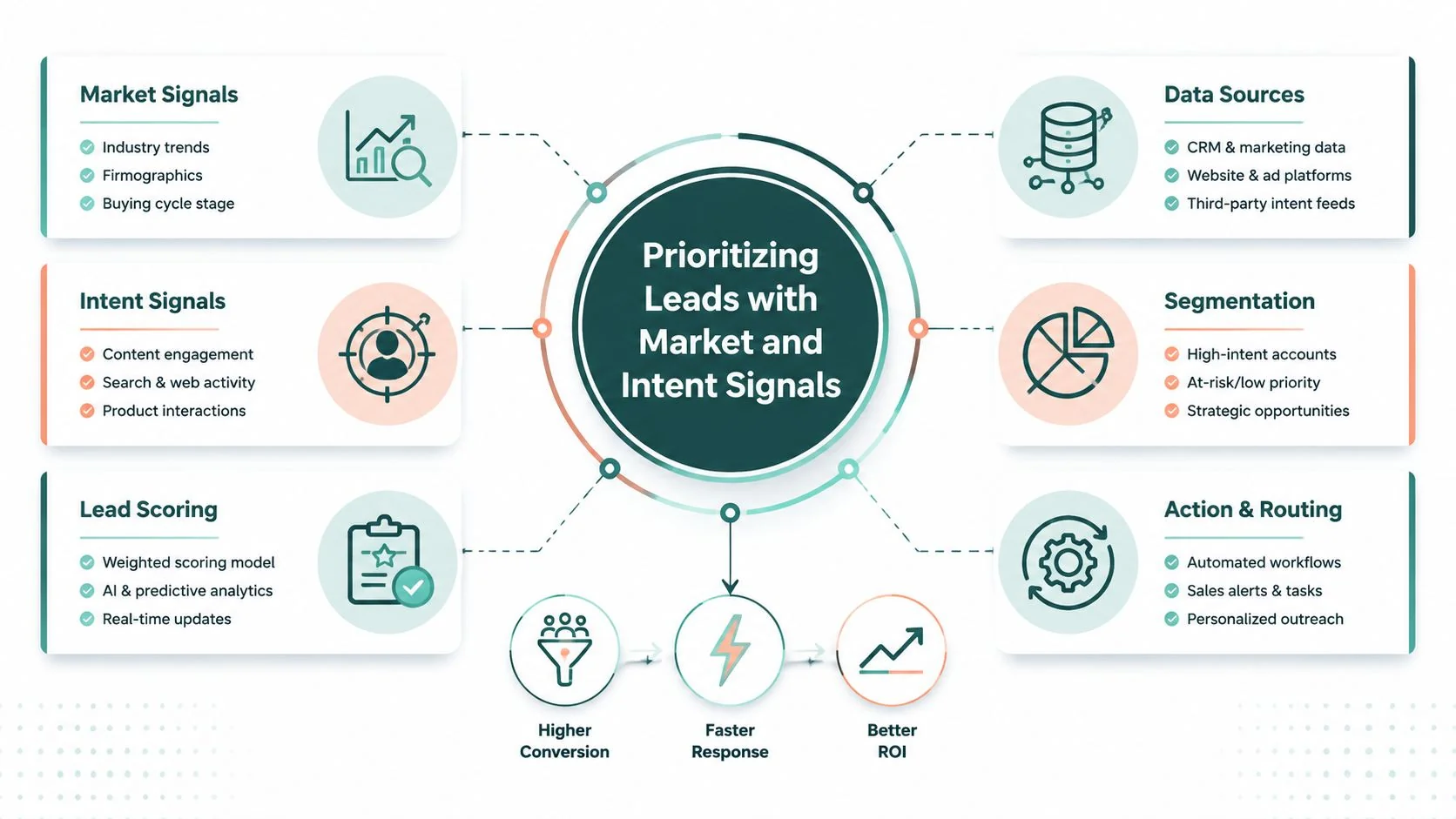
Prioritize discipline over list size. If your agency cannot state why Account A should get attention before Account B, it is reacting, not managing a pipeline.
Recognition-first systems treat prioritization as a scoring problem, not a list-building problem. Volume-based lead gen rewards activity. Recognition-first rewards relevance you can verify in the market and inside the account. That difference decides whether reps send 500 ignored emails or 25 messages that start real sales conversations.
What counts as a real intent signal
Use signals that reflect pressure, not noise. The global software development services market is growing from $497 billion in 2025 to a projected $860 billion by 2030 (Research and Markets, 2026). That growth creates new delivery demand: platform engineering buildouts, legacy modernization backlogs, compliance-driven custom work. For an agency, the practical question is what that pressure forces the buyer to solve now.
Hiring strain creates a need for outside capacity, specialist execution, or faster release cycles. A low-code push creates integration work, governance gaps, and custom extension requirements. Those are usable signals because they map to delivery problems your team can fix.
Use a three-layer score
Keep fit, problem evidence, and timing separate. If an account fails one layer, stop there.
| Layer | What to score | Why it matters for a dev agency |
|---|---|---|
| Market fit | Niche, company profile, technical environment, delivery model compatibility | Cuts broad-market waste before reps spend time |
| Problem evidence | Hiring pattern, compliance pressure, product complexity, team strain | Confirms that pain is plausible, not assumed |
| Intent timing | Search behavior, vendor comparison, category engagement, recent change events | Shows whether now is the right moment to engage |
This structure fixes a common scoring failure in agency CRMs. Teams often collapse fit and timing into one number, then send reps after accounts that look ideal on paper but have no active buying motion. Or they chase urgent accounts that were never a real fit because the stack, scope, or delivery model was wrong.
Separate fit from timing in the CRM
Your CRM should show two distinct values for every account. One score answers: “Should this company ever be in our market?” The second answers: “Should sales contact them this month?”
That separation changes behavior. Marketing can build recognition across high-fit accounts before they are active. Sales can focus only on high-fit accounts with current signals. The result is less wasted outreach and tighter message-market match.
Technical buyers often move from architecture research to vendor evaluation in public. If your scoring model ignores that shift, your outreach arrives too early or too late.
Review signals monthly, not constantly
Run a monthly signal review. Daily alerts create noise, not judgment.
A monthly review forces pattern recognition across the account set. Which accounts added engineering leadership roles? Which ones changed platform direction? Which ones started vendor comparison behavior after months of educational research? Those patterns matter more than a stream of isolated notifications.
One practical model is to combine CRM records with curated account intelligence from a provider that tracks target-account behavior. For a detailed framework for segmentation, prioritization, and account expansion, the guide to target account management is worth reading in full.
Decision standard: Ask, “What changed in this account that makes our expertise relevant now?”
Turn the signal into the message
Once an account crosses your threshold, write outreach around the trigger that moved it. Generic capability emails waste the advantage you just created.
Use the signal to shape the opening:
- Hiring pressure: Lead with delivery capacity, specialist support, or faster roadmap throughput.
- Compliance discussion: Lead with secure delivery process, architecture traceability, or regulated implementation experience.
- Low-code priority: Lead with extension, integration, and governance. Skip generic app development language.
- Stack shift or migration activity: Lead with transition risk, ramp time, and delivery continuity.
The score tells your team who to contact, when to contact them, and what claim to make first.
The 90-Day Recognition-First Activation Sequence
I spent ten years running marketing inside software development agencies, at Brainhub and then consulting across a dozen more. The same pattern showed up consistently. Agencies that built recognition before running outbound got replies. Agencies that ran outbound first got ignored.
Demandbase’s State of ABM 2026 report, which analyzed 38 million marketing activities across 1,452 companies, found that campaigns targeting accounts that had previously engaged with brand content converted at 2 to 3 times the rate of campaigns targeting cold accounts. Recognition changes the math.
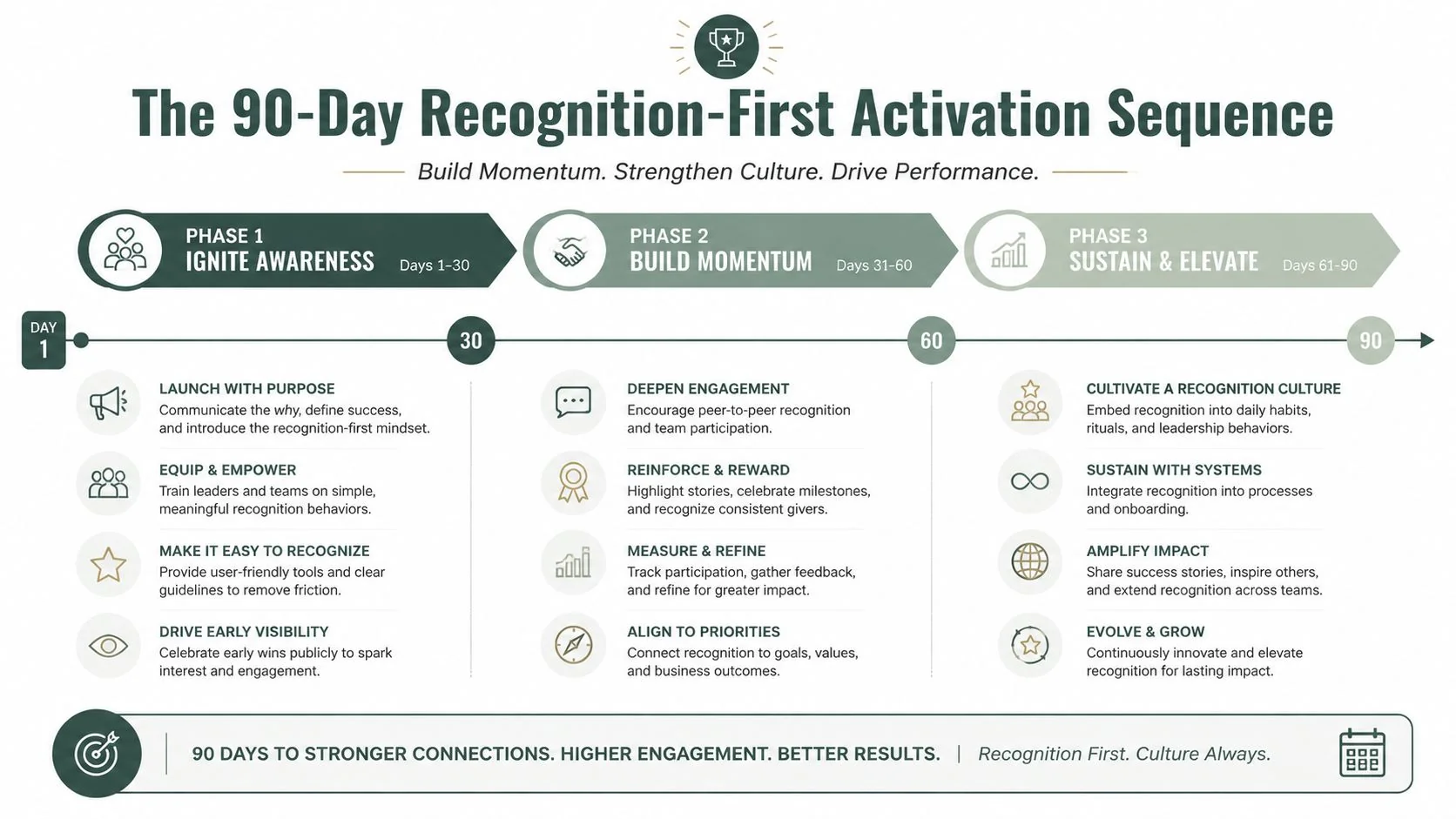
Days 1 to 30: validate a niche you can defend
Past projects do not equal positioning. Agencies say “we serve healthcare” or “we work with SaaS” and call that a niche. A defendable niche is a tight combination of buyer type, technical problem, delivery method, and proof.
Force the team to answer four questions in writing:
| Question | Bad answer | Good answer |
|---|---|---|
| What niche are we targeting? | ”Mid-market SaaS” | A constrained vertical and problem area |
| Why us? | ”We have senior developers” | Specific credibility tied to buyer risk |
| Who buys? | ”CTO or VP Engineering” | Named roles plus likely approval path |
| What disqualifies accounts? | ”Small budgets” | Technical, organizational, and delivery-fit limits |
If leadership cannot approve a one-page niche thesis, outbound should not start. The agencies that skip this step are the same ones that burn list after list and blame the channel.
Days 31 to 60: build recognition before contact
This is the phase engineering CEOs resist because it does not look like pipeline. That resistance is expensive.
The goal: make your agency easy to recognize in search, AI summaries, LinkedIn, and forwarded internal discussions before the first SDR email lands. When your outreach arrives and the buyer has already seen your perspective on their exact problem, it reads as a relevant interruption, not spam.
Build four asset types:
- Niche landing pages: One problem, one market, one proof path.
- Ranking content: Articles aligned to commercial and investigational searches in the niche.
- AI-citable assets: Plain-language pages with clear claims, delivery methods, constraints, and proof.
- LinkedIn point-of-view posts: Specific observations about architecture, compliance, migration risk, delivery tradeoffs, or team structure. No culture filler.
The Demandbase data adds a second number: director and C-level inbound replies run 6.4 times higher under account-based outreach versus generic volume campaigns. Treat recognition as a conversion lever, not a brand exercise.
Days 61 to 90: activate outbound against warmed accounts
Outbound starts now, not earlier.
Strong reply rates come from accounts that have already seen useful evidence, a specific niche claim, and a message that references a live trigger. Copy tricks don’t drive them.
Run a four-step sequence:
- Email one: Reference the market or account signal and state the niche claim in one sentence.
- Email two: Send proof tied to the same problem. A teardown, migration analysis, benchmark, or case example works.
- LinkedIn touch: Reinforce the point of view. Do not restate the pitch.
- Reactivation path: Re-contact accounts that engaged with content, visited pages, or matched a new trigger after going quiet.
Volume-based outreach sends the same message to 5,000 accounts and hopes the math saves it. Recognition-first activation sends a sharp claim to 200 to 500 accounts that already have context. One model burns domains. The other builds a market position.
Why a tight account list beats a big one
A narrow account universe works better than a broad one if the niche is real.
If three agencies all claim they build software for fintech, all three look interchangeable. If one agency is consistently recognized for post-merger platform integration for regional banks, replacement risk drops and reply quality rises.
At 100Signals, we run this model for software development agencies: one agency per niche per geography, a target list of 200 to 500 accounts, and recognition built before any sequence goes live. The niche is what makes it work. Without it, you are back to competing on price and speed.
Sales Playbooks That Convert Technical Buyers
Asking one seller to do everything is inefficient in technical sales. It lowers win rates, weakens discovery, and pushes delivery risk into the proposal.
Technical buyers distrust vague discovery. They have been burned by vendors who minimized scope risk to win the deal, then re-negotiated during delivery. Your commercial process needs to signal the opposite: precision, transparency, and an explicit plan for managing what is not yet known.
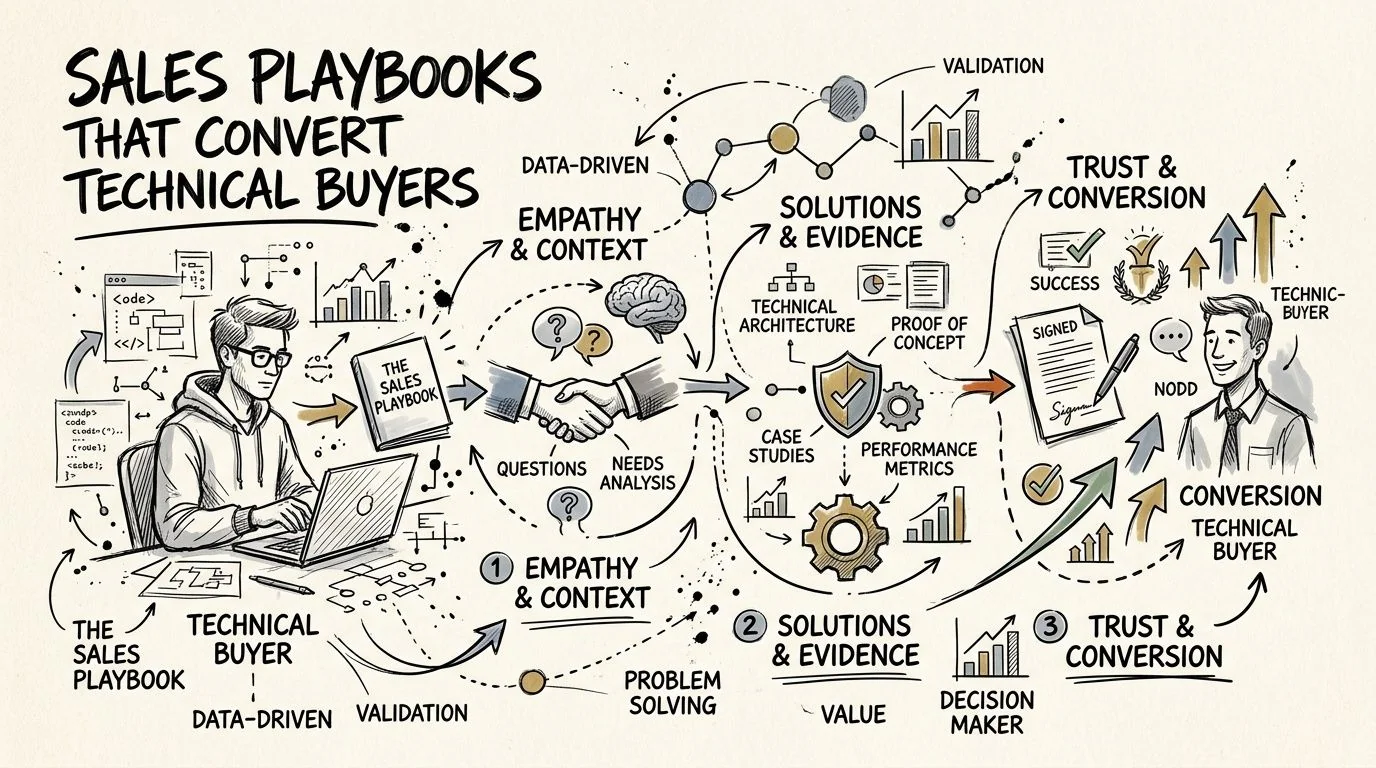
Split the playbook in two
Technical buyers do not want a rep who is half prospector, half solutions architect, and fully unprepared.
Use two motions with a clean handoff.
| Role | Primary job | What they must prove |
|---|---|---|
| BDR or SDR | Confirm timing, relevance, and stakeholder fit | The account has an active problem in your niche and access to the right evaluators |
| AE or senior seller | Run diagnosis and shape the buying path | Your agency understands technical constraints, scope risk, and approval logic |
Recognition earns the reply. The SDR confirms whether the account matches the problem pattern your agency is known for. The AE turns that market recognition into commercial confidence.
If you need a tighter operating model for that handoff, use a sales lead management process built for qualification and stage progression instead of letting reps improvise definitions.
Run discovery like a requirements workshop
Technical buyers trust precision. They reject generic discovery because generic discovery sounds like generic delivery.
Your AE should run the first serious call as a working session. The goal is to expose constraints, decision criteria, and scope risk before anyone talks about pricing, not to build rapport.
Use five question blocks:
- Problem trigger: What changed in the business, product, or infrastructure that made this project active now?
- System context: What stack, integrations, data flows, and legacy dependencies shape the solution?
- Decision path: Which leaders approve architecture, security, budget, procurement, and vendor selection?
- Failure tolerance: What cannot break during migration, rollout, or handoff?
- Delivery model: Do they need a specialist team, staff augmentation, phased modernization, or a scoped product build?
A weak brief should slow the deal down. It should never speed it up.
Sell your operating method, not just your team
Senior engineers, fast delivery, and flexible resourcing are not persuasive on their own. Every agency claims those. Technical buyers care about how you remove uncertainty before code starts.
Explain your method in concrete terms:
- how requirements get tested before proposal lock
- how assumptions are documented
- how architecture tradeoffs are surfaced to non-technical stakeholders
- how changes are reviewed without turning every adjustment into a commercial fight
- how the first sprint, audit, or discovery phase reduces delivery risk
If the market already knows you for a specific problem, the sales conversation shifts from “Can this team build software?” to “How will this team handle this exact class of risk?” That is a narrower question, and an easier one to win.
Proposals should remove ambiguity in stages
A strong proposal does not try to sound polished. It reduces unknowns in an order the buyer can validate.
Good proposals answer five questions:
- What business and technical problem is being solved now.
- What still needs validation before final scope is fixed.
- Which assumptions change timeline, budget, or architecture.
- What the first phase will prove or de-risk.
- How governance, reporting, and stakeholder approvals will work.
That format protects margin. It also helps technical buyers defend the purchase internally because it gives them a credible plan instead of a promise.
If your team closes deals on enthusiasm and broad capability language, expect rework, scope disputes, and thinner margins. Recognition gets you in the room. A disciplined technical sales playbook gets the deal signed without wrecking delivery.
Measuring What Matters and the Tools to Run the System
Measure cleaner progression, not just activity.
If your dashboard starts with meetings booked, you are already too late. Meetings are a byproduct of market recognition, account intent, and disciplined qualification. Track those inputs first or your team will optimize for calendar density instead of pipeline quality.
A recognition-first system needs proof in three places. Your agency must become visible inside a narrow market. Target accounts must show repeat engagement before outreach scales. Sales must turn that attention into qualified opportunities that match delivery strength.
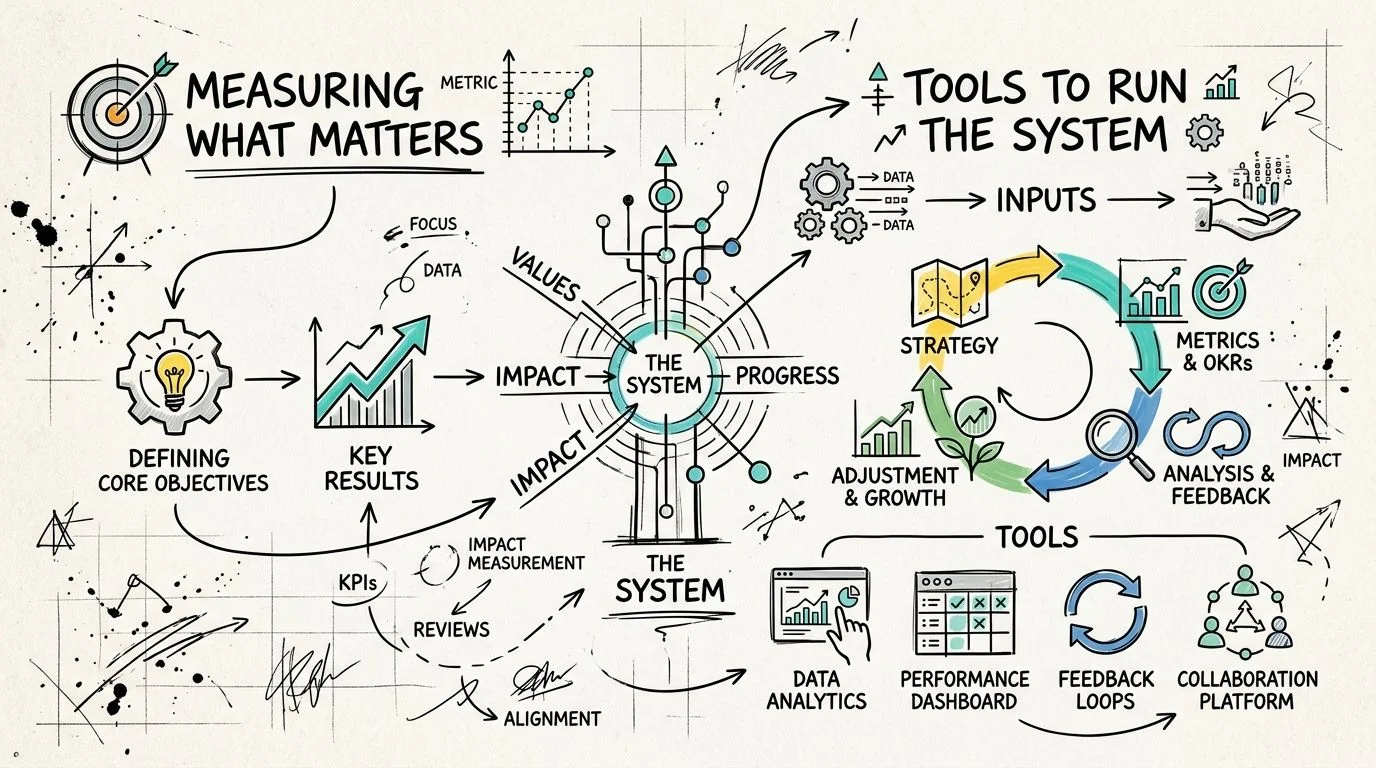
Track leading indicators first
Revenue confirms the system after the fact. Leading indicators show whether the system is working while you still have time to correct it.
| Metric type | What to monitor | Why it matters |
|---|---|---|
| Authority signal | Branded search movement, niche keyword rankings, AI assistant visibility | Shows whether your firm is being recognized for a specific problem |
| Account engagement | Visits from target accounts, repeated content consumption, reply quality | Shows whether recognition is turning into active consideration |
| Pipeline progression | Movement from first reply to qualified meeting to real opportunity | Shows whether sales is filtering signal from noise |
| Revenue lagging metrics | Closed-won deals, margin quality, retained accounts | Confirms whether the system produces profitable work |
Work through this sequence in order. If authority is flat, do not blame outbound. If account engagement rises but qualified meetings do not, fix qualification and messaging. If opportunities grow but margin quality drops, sales is feeding delivery the wrong work.
Keep the tool stack minimal
Three tool categories are enough:
- CRM: HubSpot or Salesforce. Configure separate fields for fit score, intent score, niche, buying stage, and delivery-match risk.
- Sales intelligence and intent data: ZoomInfo, structured account research, and a manual signal layer for hiring activity, product launches, funding events, stack changes, and partner moves.
- Sales engagement: Outreach or a similar sequencing platform that logs replies, thread quality, stage movement, and time-to-first-response.
Measure the quality of movement
Activity metrics create fake confidence. Progression metrics expose whether the motion is compounding.
Review these questions every month:
- Do replies come from niche-specific messages or broad capability pitches?
- Are qualified meetings clustering inside one market category or spreading randomly across industries?
- Do opportunities have a defined business case, technical trigger, and buying committee access?
- Are high-fit opportunities going to the teams best suited to deliver them?
- Is reply quality improving as authority signals improve?
A sales team can increase email volume in a week. It takes sustained market recognition to improve reply quality, shorten qualification time, and raise close rates inside a niche. Volume is the shortcut, and recognition is what compounds.
The CEO scorecard
A CEO does not need a wall of SDR activity data. A monthly operating view showing whether recognition is turning into profitable pipeline is enough.
Keep the scorecard to five lines:
- niche visibility trend
- target-account intent trend
- qualified pipeline by niche
- sales cycle health by source and stage
- delivery-fit quality of open opportunities
Read it diagnostically. If niche visibility rises and qualified pipeline stays weak, fix the offer or tighten qualification. If pipeline rises without visibility gains, outbound is pulling in weak demand. If both rise together, the agency is building category recognition that lowers acquisition friction over time.
See Where You Stand
Before any of this makes sense for your agency, you need to know what niche you can actually win, and whether you are already visible there.
Run a free Niche Position Scan at 100Signals. Enter your agency URL and in ten minutes you get a read on your current LLM visibility, your top three competitor gaps, and two to three niche angles with signal strength scores.