A Curated List of VC Firms for Dev Agencies (2026)
Our curated list of VC firms and data platforms helps dev agencies find clients and partners. We cover Crunchbase, PitchBook, and more for market intelligence.
The U.S. venture capital market ended 2023 with 3,417 VC firms, 13,608 deals, $170.6 billion in cumulative deal value, and $311.6 billion in dry powder, according to the NVCA Yearbook. For software development agencies, those firms and their portfolio companies are a list of likely buyers. A serious list of VC firms tells you where fresh capital sits, which firms back your niche, and which portfolio companies will need engineering help after the wire hits.
For agency CEOs, the point is simple. Sell to the portfolio companies, not to the VC firms. When a firm is active, well-funded, and concentrated in a sector you serve, it creates repeatable pipeline. The fastest way to use a list of VC firms is to sort by investor behavior, stage, and portfolio signal, then prospect the companies they already back.
1. Crunchbase
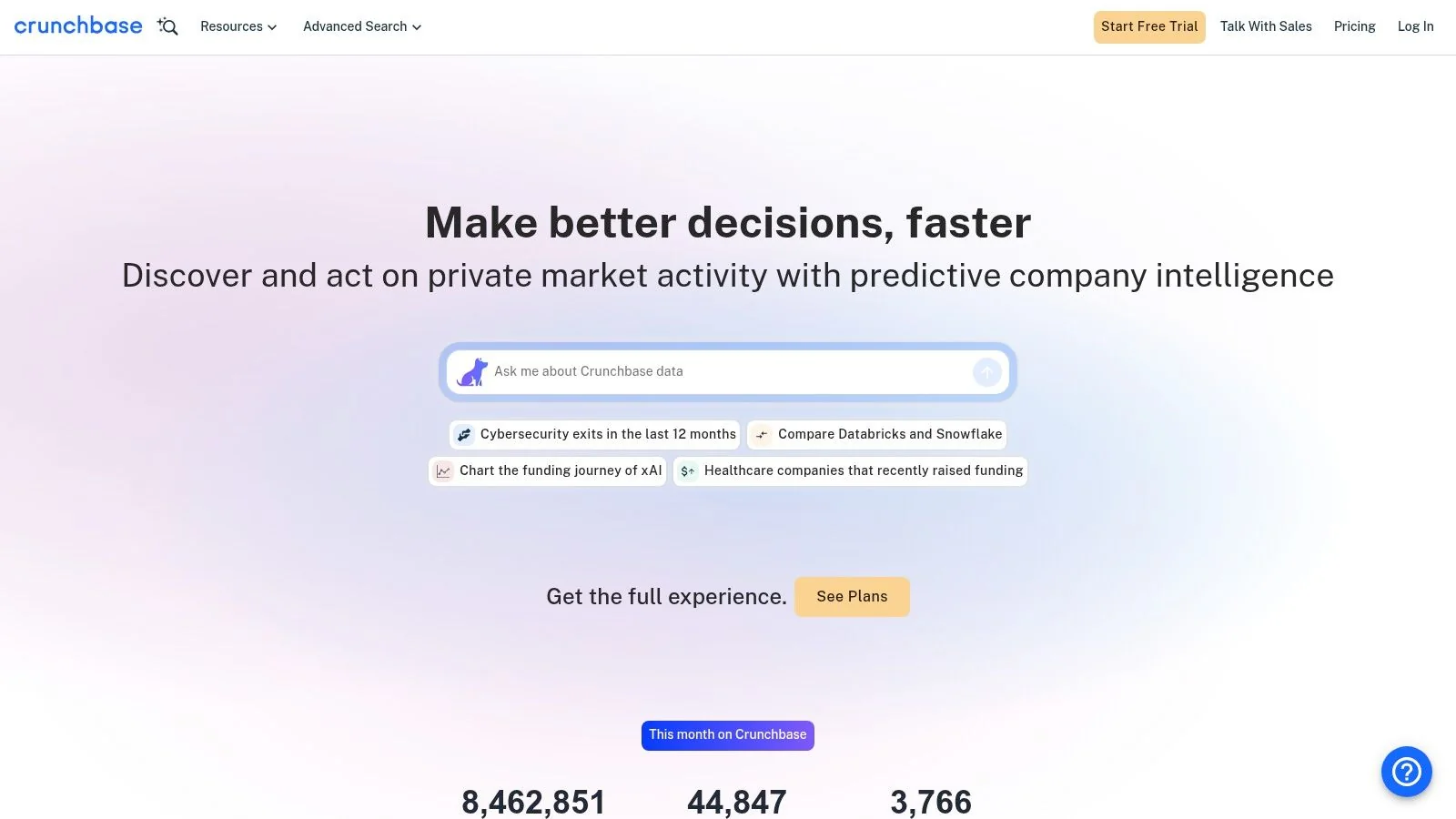
Crunchbase is the quickest self-serve starting point if you need a list of VC firms that your team can operationalize. The platform is built for filtering investors by stage, geography, and activity, which matters more to an agency than raw prestige because you need firms that keep funding companies with ongoing build needs. Use it to find the investors behind software, infrastructure, and developer-tool startups, then turn those firms into named account clusters.
Best use case for agencies
Crunchbase works best when your sales motion depends on speed. Saved lists, alerts, exports, and API access let ops teams keep a living target list instead of a stale spreadsheet. For agencies, that means you can build a daily watchlist of VC-backed companies in your niche, then fire outbound based on funding events instead of generic ICP guesses.
Practical rule: use investor filters first, then follow the portfolio. That sequence gives your outbound a trigger event, which is far stronger than cold brand outreach.
Why it matters for pipeline
The value lies in finding companies that just got funded by those VCs. A portfolio company with fresh capital needs engineering, QA, product delivery, cloud migration, data engineering, or design support much faster than a company that has not raised. If your agency serves a narrow stack, Crunchbase gives you a way to tie that stack to investor theses and keep the list moving.
For adjacent demand-gen work, the 100Signals lead generation method pairs well with Crunchbase-based account selection.
2. PitchBook
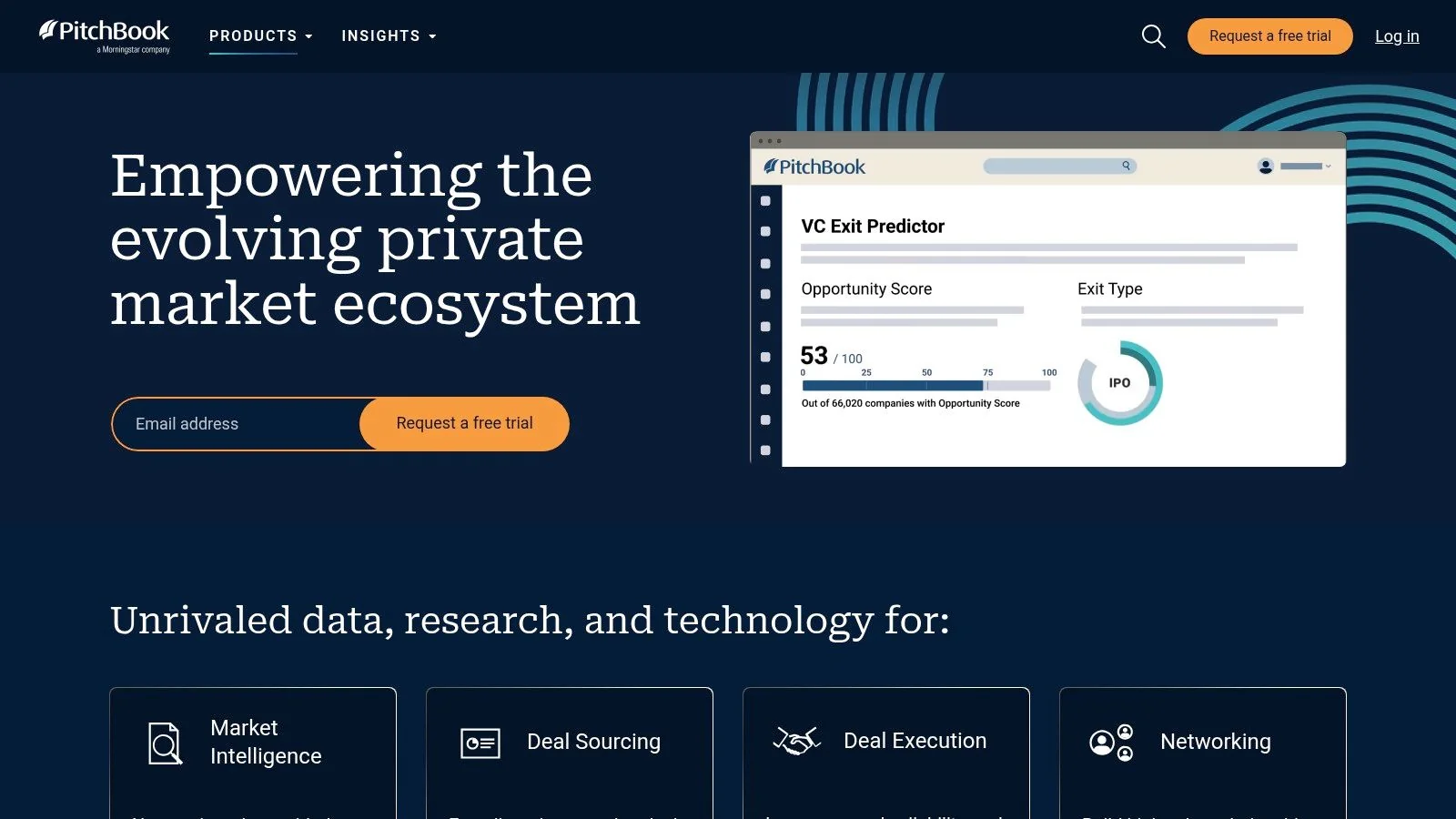
PitchBook is the institutional option when your agency needs a verified list of VC firms with actual fund histories, deal histories, and co-investor context. The platform sits in a different lane than lightweight directories because it is built for diligence, benchmarking, and investor research. If you’re selling into funds, studios, or VC-backed operating companies, PitchBook gives your team the context to stop guessing.
Where it beats cheaper tools
PitchBook is the better choice when you care about who co-invests with whom, how long a firm has been active, and whether a fund fits your target stage. Analyst research and benchmark views matter for agencies that sell high-trust services, because the account strategy gets sharper when you can see a firm’s historical behavior instead of just its website bio. That is useful when you are building a named-account program around growth-stage software buyers.
The platform also supports exports and API access through quote-based packaging, which makes it suitable for revenue teams that want to sync investor intelligence into CRM or outbound tooling. That’s the right fit if your agency has a structured SDR motion and wants to route signals into sequences automatically.
When to choose it
Choose PitchBook if your ICP is narrow and the deal size justifies research time. It is overkill if you only need a fast list of active firms. It is the right tool if you need investor lists with historical context, because historical context tells you whether a firm is a real buyer signal or just a logo in a directory.
For GTM planning, the 100Signals demand generation method pairs cleanly with PitchBook-driven account segmentation.
3. CB Insights
CB Insights makes sense when you need a list of VC firms plus market context, not just names. That matters for agencies selling into software categories that move with market narratives, because a fund list alone does not tell you where spend is likely to show up next. You need the investor map and the thesis map together.
Why it’s different
The platform adds proprietary scoring, predictive analytics, sector research, and a Gen-AI interface for querying the dataset. For agency leadership, that means you can connect investor behavior to market momentum and use the output to choose which vertical deserves a dedicated outbound motion. If your agency serves cybersecurity, fintech, or healthcare software, that extra layer helps you decide which category should get the most content, ads, and prospecting effort.
Standout point: Use CB Insights when you are choosing which vertical to pursue and want market data behind the choice, not only a list of names.
Why it matters for pipeline
CB Insights is strongest when your agency wants to build authority around a niche and then prospect into the investors backing that niche. The combination of company coverage and investor context is useful for identifying where capital is concentrated, which is where service demand tends to follow. You use it to decide which segment deserves your best case studies, landing pages, and outbound sequences.
If your team wants pricing context before committing budget, the pricing overview is a useful comparison point for how enterprise research tools position themselves.
4. Dealroom.co
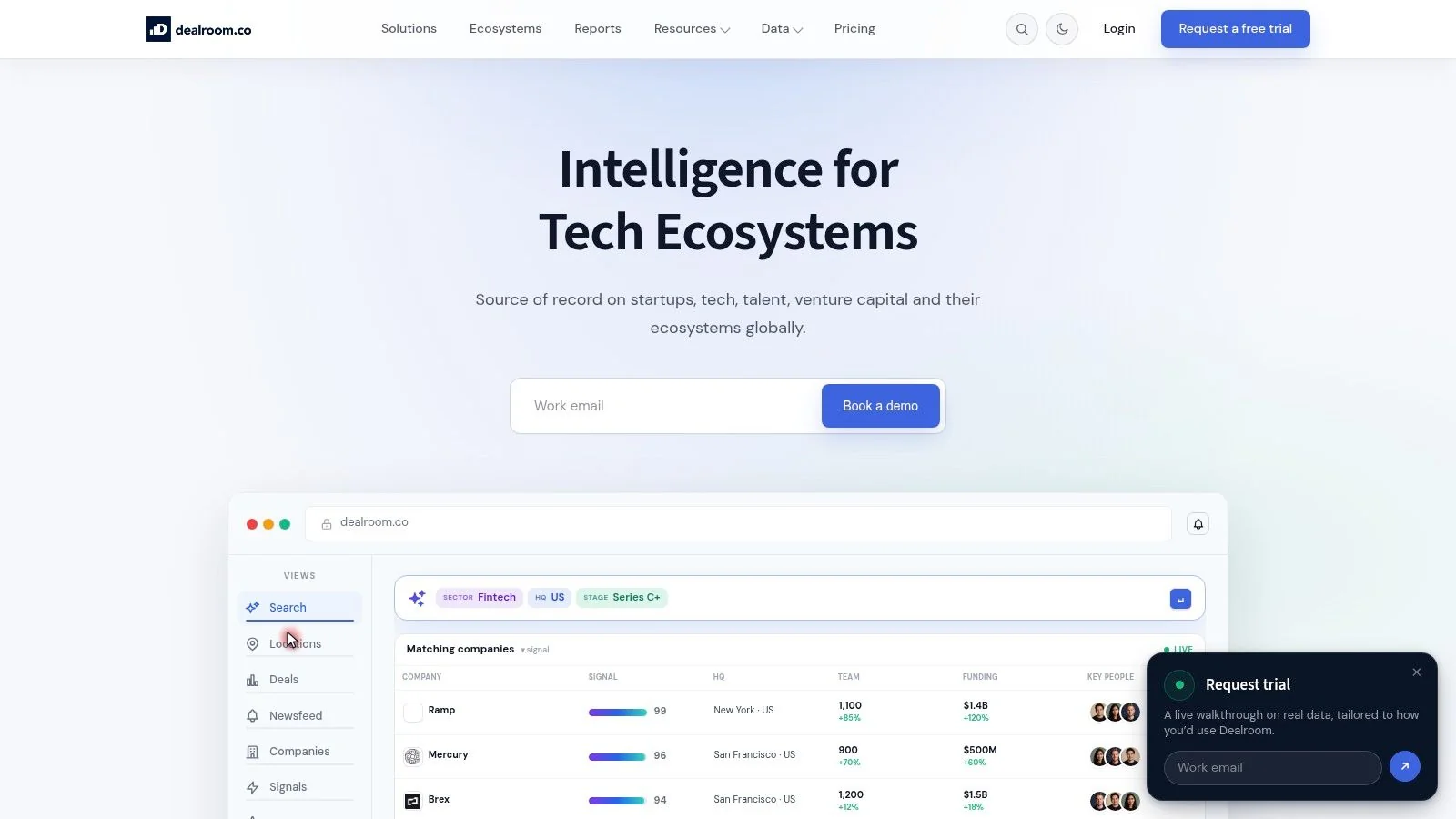
Dealroom is the practical middle ground for agencies that want a list of VC firms with solid geography filters, decent usability, and less friction than top-end analyst platforms. Its strength is particularly visible outside the U.S., where ecosystem mapping and regional coverage matter for agencies that sell to founders in Europe or globally distributed markets. Use it when your pipeline strategy depends on finding active firms in a specific geography or sector.
Best fit for regional prospecting
Dealroom’s searchable investor database and plan-dependent CSV exports make it useful for building warm-path lists around cities, countries, and sectors. That matters because agencies often waste time chasing “top VC firms” when the actual near-term buyer is a regional firm that just backed five software companies in your niche. If you run outbound by region, this is a cleaner fit than generic directories.
The transparent pricing approach also helps smaller ops teams move faster. You can get in, build a list, and pressure-test a market segment without committing to an enterprise procurement cycle. That suits a dev agency deciding whether to open a new niche.
Why it matters for pipeline
Dealroom helps you find clusters as well as firms. Clusters matter because a cluster of investors in one geography or sector usually means a cluster of portfolio companies with related engineering needs. If your agency has a repeatable offer for product modernization, AI integrations, or SaaS rebuilds, Dealroom makes it easier to identify where those offers will resonate.
5. Tracxn
Tracxn is the list of VC firms tool you use when follow-on targeting matters. The platform’s investor database is broad, and its “Next Round Investors” feature is especially relevant for agencies because it points toward the firms most likely to participate in the next financing event. That is useful for mapping the full funding path around a portfolio company, not just the first check.
Where it helps revenue teams
Tracxn lets you slice investor sets across VC firms, corporate VCs, angels, and PE, which is useful when your agency sells different offers to different buyer types. A seed-stage fund backed by a technical portfolio has a different service demand profile than a later-stage growth fund, and Tracxn gives you the structure to separate them.
It also includes AI assistant and MCP/data tools for programmatic access, which makes it attractive if your ops team wants to turn investor intelligence into repeatable workflows. For an agency with a real sales engine, that turns a one-off list into an account system.
Why it matters for pipeline
Tracxn’s best use is prioritization. If you know which investors are likely to show up in the next round, your agency can time outreach around scale-up pressure instead of waiting for a founder to “need help.” Timed to the round, outreach gives a generic list of VC firms a reason to contact each company now.
6. Signal by NFX
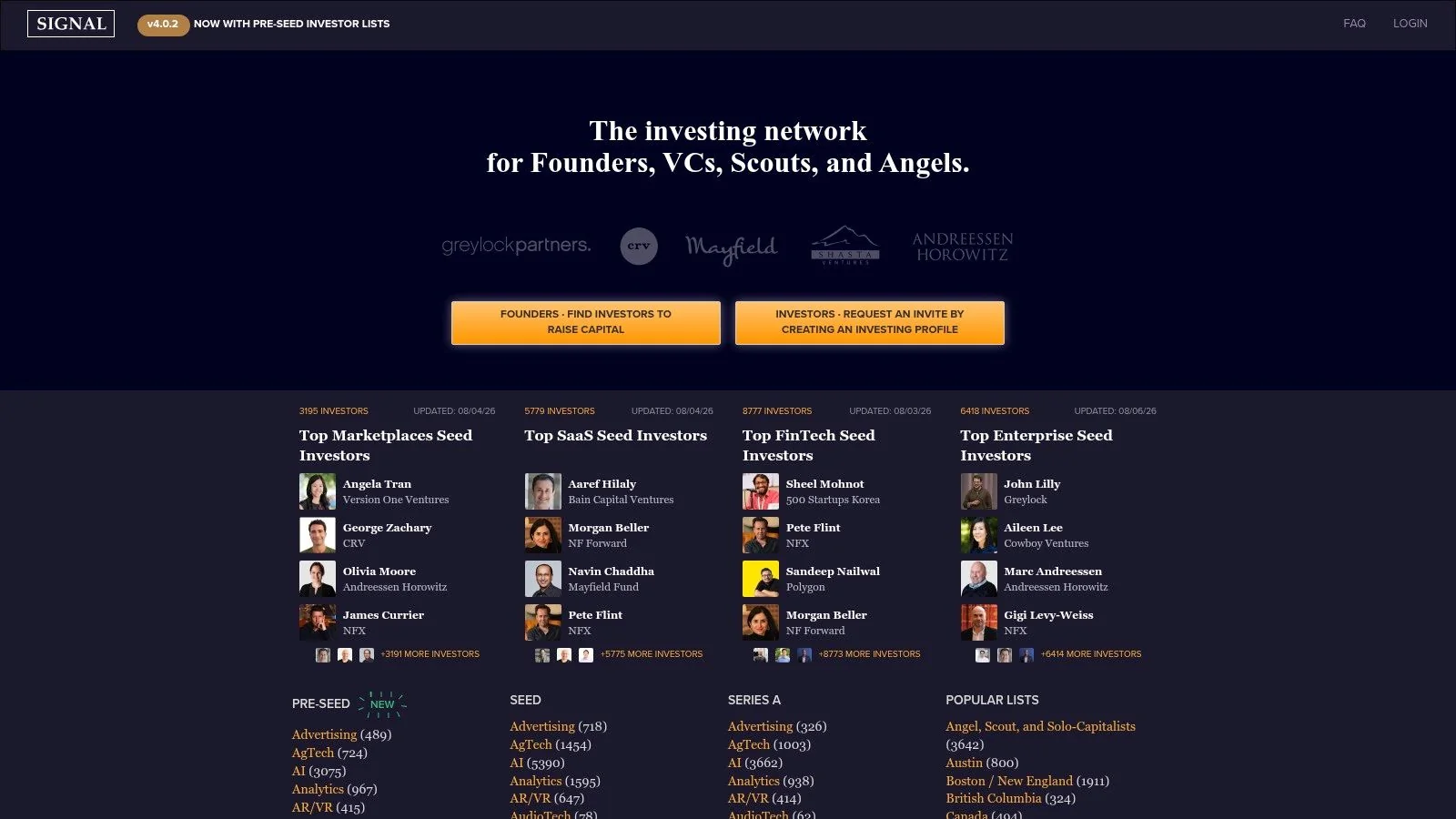
Signal by NFX is the leanest option on this list, and that is exactly why many teams should start there. It is a free founder-investor directory built around intros, partner-level discovery, and investor profiles. If your agency wants a list of VC firms without paying for a heavyweight database, this is the most direct path to a usable shortlist.
Best use case for warm-path selling
Signal is useful because it puts intro paths in front of the user. For agency founders, that matters less for raising capital and more for selling into VC networks where warm access still beats cold outreach. If you already have a few founder or operator relationships, Signal helps you identify who inside a firm is worth targeting.
The tradeoff
The data is lighter than paid databases, and CRM integration is limited. That is fine if you only need a fast discovery layer. It is not fine if you need deep fund history or broad export functionality. Use it for shortlist creation, then move the qualified names into your pipeline system.
Your best agency prospects are usually the partners who repeatedly back companies that need the exact services you sell.
For practical outbound framing, the agency lead generation success stories show how agencies package proof.
7. OpenVC
OpenVC lists firms that tell you what they invest in. For a list of VC firms strategy, that transparency matters, because you can filter by self-declared stage, geography, and thesis instead of trying to infer fit from a generic profile. It also works when you want to turn a broad directory into a narrow target list.
Why agencies should care
OpenVC’s 400+ curated investor lists by thesis make it useful for agencies that want niche authority. If you serve dev tools, cybersecurity, or SaaS infrastructure, you can build a VC list around that exact category, then prospect portfolio companies with a clean narrative. That beats spraying a broad VC directory and hoping some names stick.
The founder resources beyond investors also help teams that support startup clients, because the platform is designed around practical fundraising prep rather than prestige. For agency positioning, that means the data tends to align with real founder behavior, which improves the chance that your outreach lands on an active buyer.
Pipeline angle
OpenVC is strong for agencies because self-declared thesis fields reduce wasted time. When a firm says exactly what it backs, your team can map that to portfolio company pain faster. That cuts down on outreach to firms whose portfolios don’t match your offer.
Top 7 VC Data Platforms Comparison
| Tool | Implementation complexity | Resource requirements | Expected outcomes | Ideal use cases | Key advantages |
|---|---|---|---|---|---|
| Crunchbase | Low, self‑serve UI; API for workflows | Moderate, subscription tiers; exports/contact gated to higher plans | Fast, iterative target lists of U.S. VC firms | Founders and GTM teams building outreach lists quickly | Broad U.S. coverage, fast filters, widely used |
| PitchBook | Medium–High, enterprise onboarding, analyst curation | High, sales‑quoted pricing, enterprise packaging | Verified investor & fund profiles with historical deal context | Diligence, benchmarking, institutional research | Deep, analyst‑curated dataset and fund performance detail |
| CB Insights | Medium, enterprise platform with research and Gen‑AI | High, enterprise pricing, research report access | Market mapping and investor trends with proprietary scores | Market strategy, executive targeting, trend analysis | Proprietary analytics and research-backed signals (e.g., Mosaic) |
| Dealroom.co | Low–Medium, self‑serve onboarding, transparent tiers | Moderate, tiered pricing; exports/API plan‑dependent | Global investor lists with strong European coverage | European market mapping, ecosystem and regional programs | Strong EU coverage, usable UI, transparent pricing |
| Tracxn | Medium, platform with advanced filters and AI tools | Moderate, paid tiers for best features, competitive pricing | Segmented investor lists and follow‑on investor signals | Building targeted lists, identifying likely follow‑ons | Broad coverage, practical list‑building features |
| Signal by NFX | Low, free directory focused on partners | Low, free access, limited CRM/export integration | Quick discovery of partner‑level profiles and intro paths | Early‑stage founders seeking warm introductions | Free, partner‑level targeting, emphasis on warm‑intro visibility |
| OpenVC | Low, community‑driven, simple interface | Low, community resource, limited bulk workflows | Lists of firms that publish explicit investment criteria | Rapidly finding firms by thesis for early fundraising prep | Transparency, curated thesis lists, founder resources |
From VC List to Agency Pipeline
A list of VC firms only matters if it changes how your agency sells. The right process is to use Crunchbase, PitchBook, CB Insights, Dealroom, Tracxn, Signal by NFX, or OpenVC to build a live map of firms, then watch for portfolio funding events, hiring spikes, and category concentration. The market signal is already there. By the end of 2023, the U.S. VC ecosystem still had $311.6 billion in dry powder, according to the NVCA Yearbook, which means new funding rounds have capital behind them.
Agency CEOs should treat that as a routing problem, not a research exercise. If you sell product engineering, choose VC lists that surface seed and Series A firms with active portfolios. If you sell scale-up help, focus on growth-stage funds with large AUM and repeated deployment. If you sell a niche stack, build a list by sector, not by brand. The point is to match your offer to the buyers that the capital flow already created.
The best next move is operational. Build one investor list by niche, map the portfolio companies, and trigger outreach after funding announcements. That is how you stop chasing generic lead lists and start owning a repeatable niche where funding announcements trigger your outreach.