7 Follow up Email After Meeting Sample Designs
No more ignored emails. Get 7 data-backed follow up email after meeting sample templates designed for dev agency founders to convert meetings into pipeline.
Generic advice about a follow up email after meeting sample keeps aiming at politeness. That misses the job. For a software development agency, the follow-up is the first document your buyer can forward to their CTO, compare against three other agencies shortlisted alongside you, or drop into the deal thread as evidence you understood the actual problem. If your email says “great chatting” and little else, you made yourself easy to ignore. There are over 1,700 dev agencies competing for the same contracts. Technical depth gets a hearing, but the agencies that advance prove they understood the buyer’s specific domain before anyone else did.
TL;DR
- A follow-up email is a sales asset, not a courtesy note. Treat it that way.
- Send within two hours. Same-day follow-up dramatically increases next-meeting rates.
- Each touch needs one job: build trust, confirm intent, remove an objection, or secure a next step.
- Seven designs cover the main pipeline states: social proof, referral, intent trigger, authority content, next-step proposal, objection handling, and sequence handoff.
- Stop after three touches. Then shift channels.
For dev agency founders, this matters more than the call itself. Buyers pick the team that proves it understood the domain risk, the procurement constraints, and the business decision behind the technical brief. Sounding technically capable for 30 minutes earns less than that. A post-meeting email has to do one of three things: build authority, use fresh intent, or remove friction to the next step. Everything else is filler.
Speed is part of the design. Gong analyzed more than 20,000 sales opportunities and found that sales teams were far more likely to book a next meeting when follow-up happened quickly after the first conversation, rather than days later. The practical rule is simple. Send the first post-meeting email the same day. If the meeting mattered, two hours beats tomorrow.
Sequence length also gets abused. Reps hear “follow up more” and turn that into repeated nudges with no new information. That is bad strategy. Brevet’s summary of sales follow-up research notes that many deals require multiple touches before conversion, but persistence works only when each touch adds a reason to reply. The first email carries the most weight because it sets the standard for every touch that follows.
This article is built for dev agency founders who tried the polite template route, sent the meeting recap, attached the capabilities deck, and got silence, or worse, a reply that treated them as one of many vendors quoting an hourly rate.
The seven follow-up email designs below each map to a pipeline goal inside a real B2B sales process: social proof to reduce perceived risk, intent-based timing to catch active evaluation, authority content to shape the buying criteria, objection handling to keep momentum, and sequence handoff to stop deals from stalling between founder-led sales and team execution.
If you want better subject lines for these designs, keep a swipe file of high-converting follow-up email subject line templates.
1. The Value-Add Follow-Up with Social Proof
A value-add follow-up reduces perceived risk by combining a pain point mirror, one relevant asset, and one specific proof point. Agencies that add a useful resource instead of a generic check-in get higher reply rates and stronger internal forwarding inside the buyer’s account.
Generic recap emails do not lose deals on their own. They just make you indistinguishable from every other agency in the inbox. In a high-value B2B sales cycle, that is enough to stall momentum.
For this email design, the job is simple. Reduce perceived risk and prove expertise in one move. Recap the buyer’s real constraint, add one useful asset, and attach proof that another buyer trusted you with a similar problem. Skip the polished thank-you note. Send something a VP can forward internally.
Martal Group notes that early follow-up performs best when it is personalized with relevant context, a clear next step, and a useful resource instead of a generic check-in, as explained in its guide to B2B follow-up email best practices. For a dev agency, niche authority comes from what you add after the meeting.
What to include
Keep the structure tight. Four parts are enough.
- Pain point mirror: Repeat one specific issue the buyer named. Example: “You said enterprise prospects respect your technical team, but your agency rarely shows up early in vendor evaluation.”
- One asset only: Send one useful resource. A one-page benchmark, teardown, or relevant case study beats a 20-slide deck.
- Specific proof: Add one short client example, result, or benchmark tied to the same buying situation.
- Concrete next step: Ask for one decision or one reply. Do not stack options.
This is a usable follow up email after meeting sample for this design:
Subject: Notes from our fintech demand gen discussion
Hi Sarah, Good speaking today. You mentioned the core issue isn’t lead volume. It’s that the right buyers don’t see your agency early enough in the shortlist process.
I attached a one-page benchmark on how agencies in regulated B2B categories frame authority before outbound. The section to review is the part on search visibility, buyer education content, and how that shifts reply quality.
We used this approach with a compliance-focused software firm that needed stronger early-stage consideration from enterprise buyers. The fix was tighter category positioning, one comparison asset, and outbound built around the same message.
Based on our discussion, I’d start with one niche page, one comparison asset, and one outbound sequence tied to the same message.
If useful, I can send a 3-point teardown of your current positioning against that benchmark.
Best, [Name]
Why this works for niche authority
A value-add follow-up gives the buyer something useful to circulate inside the account. That changes the email from courtesy to sales asset.
Agency founders usually lose on perceived fit, not technical capability. The prospect believes you can build. They are less sure you understand their market, procurement pressure, internal politics, or buyer journey. Social proof fixes part of that problem when it is narrow and relevant.
Use proof that matches the buyer’s context. A healthcare software agency can send a short note on how regulated buyers evaluate vendors. A commerce engineering shop can send a one-page teardown of the search terms it should own. A product engineering agency selling into SaaS can send a comparison of how specialist firms are judged against generalist vendors.
Send the asset that sharpens the buyer’s decision. Leave your services overview for later.
2. The Mutual Connection Referral Follow-Up
A referral follow-up borrows trust the buyer already has. Name the mutual contact in the first line, restate the problem from the meeting in plain language, and propose one concrete next step. Trust transfer happens faster here than in any other post-meeting email design.
Generic follow-ups die in crowded inboxes. A referral-based follow-up survives because it borrows trust the buyer already has.
For dev agencies, this is critical because buyers already assume every agency makes the same promises. A mutual connection changes the frame: you are attached to a person the prospect already trusts enough to answer, hire, or ask for advice, instead of being another vendor claiming expertise.
That distinction matters in high-value B2B sales cycles. Gartner’s research on B2B buying shows buying decisions involve multiple stakeholders, not one champion. A strong follow-up email has to be forwardable inside the account. A referral note does that better than a polished recap because it carries social proof and context in the first line.
How to write it without sounding fake
Keep it tight. Name the connection, state why the introduction is relevant, then propose one concrete action.
Use this structure:
- Connection first: Mention the mutual contact and the specific context.
- Problem second: Restate the issue discussed in the meeting in plain language.
- Action third: Offer one next step the buyer can approve in seconds, or suggest a three-way thread.
Example:
Subject: Great speaking, and a note from James
Hi Priya, Good meeting today. As mentioned on the call, James Lee and I worked together when he was building outbound at Northpath, and he suggested we compare notes because your team is dealing with a similar enterprise pipeline problem.
You mentioned two constraints: broad positioning and weak follow-through after discovery calls. I think those are connected.
If helpful, I can draft a short niche-message teardown and copy James on the reply so you’ve got shared context.
Best, [Name]
The mistake agency founders make here is overexplaining the relationship. Skip the backstory. If the referrer matters, their name already does the work. If the name does not carry weight with the buyer, this design is the wrong choice.
Why this works for pipeline quality
This email design is about trust transfer.
Founders often win meetings through personal credibility, then lose momentum when the account expands and procurement, marketing, or product leaders join later. A referral follow-up fixes that by turning borrowed credibility into a written asset the buyer can forward internally without extra explanation.
It also reduces decision friction. The recipient does not have to figure out who you are, why you are relevant, or what to do next. All three answers are in the first few lines. In a sales motion where inbox competition is brutal, that is the difference between a reply, an internal forward, and silence.
Use this design when the mutual contact is real, relevant, and recent. If you force it, you look manipulative. If the connection is legitimate, use it early. It shortens the trust gap faster than another “great to meet you” note ever will.
3. The Intent-Based Trigger Follow-Up
When a buyer signals intent in the meeting, reply the same day in their exact words. Mirror the trigger verbatim, attach one page that answers it, and keep the email under 100 words. Speed matters: Harvard Business Review data shows firms that respond within one hour are nearly seven times more likely to qualify the lead.
Polished follow-ups lose deals.
If a buyer showed intent in the meeting, reply to that signal fast and in their words. Agency founders often waste the next six hours building slides the prospect never asked for. The better move is simpler. Send a short email tied to the buying trigger, then attach one useful asset that answers it.
For niche B2B sales cycles, intent is rarely subtle. The buyer says pipeline needs to improve before next quarter. They admit enterprise prospects are not finding them early. They mention they are comparing specialist agencies against generalist firms or an internal hire. Those comments are openings.
The operating rule
Keep this under 100 words. Mirror the exact problem statement from the call. If the buyer said “visibility gap before shortlist,” do not rewrite it as “top-of-funnel awareness challenge.” That translation strips out urgency and makes the email sound templated.
A clean example:
Subject: Re the visibility gap you mentioned
Hi Daniel, You mentioned that enterprise buyers aren’t finding your team early enough, especially before formal shortlist stage.
I pulled together one page on where that usually breaks: category positioning, search coverage, and weak post-meeting follow-through.
If useful, I can send a short audit on those three points today and flag the fastest fix first.
Best, [Name]
Why this works in high-value B2B sales
This design is about pipeline movement, not manners. You are responding to active intent while it is still fresh in the buyer’s inbox and internal conversations.
Speed changes outcomes. The lead management research summarized by Harvard Business Review found firms that contacted web leads within an hour were nearly seven times as likely to qualify the lead as firms that waited even one hour longer, and more than 60 times as likely as companies that waited 24 hours or more. The study is old, but the operating lesson still holds for agency sales. Response delay kills momentum faster than mediocre prose.
A triggered follow-up works precisely because it reads like the next logical step from the meeting. It does not read like marketing automation. That distinction matters in agency deals where one email often gets forwarded to a co-founder, revenue leader, or technical stakeholder who missed the call.
Use this design when the meeting surfaced a clear trigger:
- Budget timing: They said “next quarter,” “this half,” or tied the work to a planning cycle.
- Channel weakness: They named search, AI assistants, LinkedIn, outbound quality, or low direct traffic from the right accounts.
- Active evaluation: They referenced other agencies, an internal build, or dissatisfaction with the current partner.
- Market shift signal: They mentioned AI compressing delivery timelines, clients questioning the T&M model, or a competitor claiming a niche they have not moved on. That is a strategic opening.
Practical rule: If the buyer gave you a signal you can answer in one page, send the page the same day.
Example. A product engineering agency says referrals still drive most revenue, but outbound has never produced qualified meetings. Send a one-page framework on niche message-market fit and where agency positioning usually breaks. A data engineering consultancy says regulated buyers keep asking for proof. Send a one-page proof architecture showing how to package case studies, compliance language, and vertical evidence for procurement review.
The asset changes based on the trigger. The design does not.
4. The Authority-Reinforcing Content Follow-Up
Authority content teaches the buyer how to make a better decision. A benchmark brief, positioning teardown, or comparison memo proves you understand the buying problem better than the other agencies on the shortlist. The asset earns a forwarded email. A recap note rarely does.
Generic follow-ups lose agency deals. A smart piece of content wins them.
After the meeting, your buyer is comparing you against internal options, incumbent vendors, and agencies that all claim “strategic” thinking. A recap email does nothing in that comparison. Send a content asset that proves you understand the buying problem better than the other choices on their shortlist.
That standard is higher in software and dev services. Technical buyers inspect arguments. They forward your email to a VP Engineering, a founder, or a revenue lead and ask, “Does this person get our market?” If your asset cannot survive that internal review, it will not move the deal.
What qualifies as authority content
Authority content teaches the prospect how to make a better decision. It sharpens their view of risk, positioning, or channel fit. It does not pitch your agency for three pages.
Use assets like these:
- A benchmark brief: How buyers in one vertical research, compare, and shortlist service partners
- A teardown: Where the prospect’s current positioning creates confusion or attracts the wrong leads
- A comparison memo: The tradeoffs between a niche specialist and a broad agency for one specific growth goal
A practical follow up email after meeting sample:
Subject: The benchmark I mentioned on buyer research behavior
Hi Elena, Good discussion earlier. You were clear that the issue is not capability. It is being treated like a generalist firm in a category where buyers want a specialist.
I’m sending the brief I mentioned on how buyers in your segment evaluate service partners across search, AI assistants, and LinkedIn. The two sections to read first are the part on category language and the part on shortlist friction. Both map directly to what you described on the call.
If it lines up with what your team is seeing, I can annotate the two places on your site where your message is weakening authority.
Best, [Name]
Why this works in high-value B2B sales
This email design changes the frame. You stop acting like a vendor chasing a response and start acting like the expert who already has a model for the buyer’s problem.
100Signals reported in its research on managing sales leads after initial outreach that reply rates and meeting conversion improved after teams added authority-building follow-ups tied to niche positioning and customized assets. The practical takeaway for an agency founder is simple. Send material that helps the buyer explain the problem internally, not a polite summary of the call.
Keep the asset library small. Three strong pieces beat 30 forgettable ones.
If you sell to healthcare SaaS, build one buyer research benchmark, one positioning teardown framework, and one short memo on authority gaps that stall procurement or stakeholder buy-in. That set is enough to support dozens of follow-ups while still sounding specific.
5. The Specific Next-Step Proposal Follow-Up
Package the next step like a decision memo: clear scope, clear effort, clear output, clear date. Offer two or three defined paths. Buyers approve specific artifacts faster than vague conversations. “45-minute working session with defined output” advances a deal. “Let’s keep talking” does not.
A strong meeting can still die in the next 24 hours. The reason is simple. The buyer leaves with interest, then gets pulled back into internal reviews, budget questions, and competing priorities. Your follow-up has one job: convert interest into a decision about the next action.
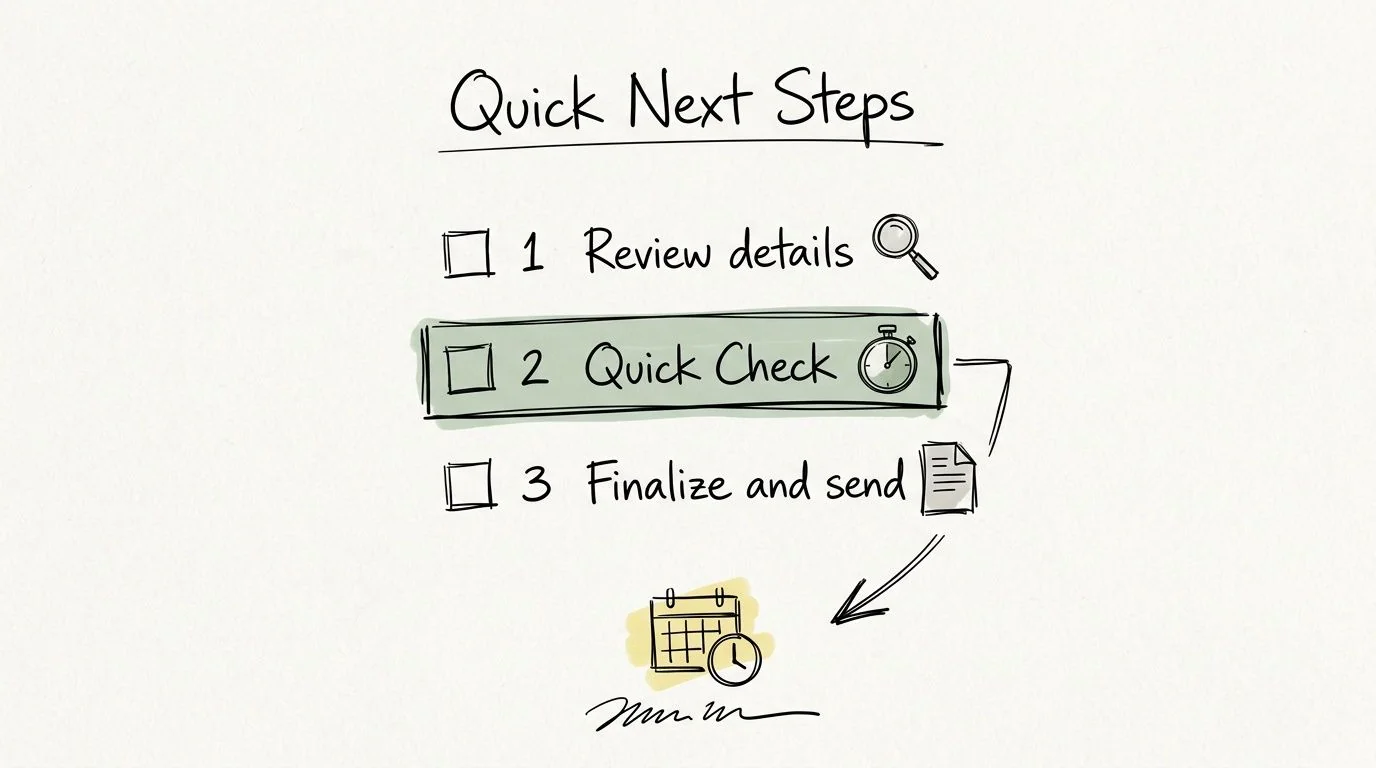
For agency founders, this email design is about deal control. Generic follow-up advice tells you to thank the prospect, recap the conversation, and ask if they want to talk again. That is weak. In a high-value B2B sales cycle, the next step needs to be packaged like a decision memo: clear scope, clear effort, clear output, clear date.
Structure the options like an engineer
Give the buyer two or three paths, each tied to a different level of commitment. One should be asynchronous. One should be a working session. One should fit a later-stage account that needs a broader plan before procurement or leadership review.
Use this structure:
- Option 1: A low-friction deliverable they can review internally.
- Option 2: A time-boxed session with a defined outcome.
- Option 3: A larger planning artifact for multi-stakeholder evaluation.
Example:
Subject: Three practical next steps
Hi Marcus, Based on our call, I see three useful paths from here.
- I send a short teardown of your current niche messaging and where it weakens buyer confidence. No meeting required.
- We run a 45-minute working session to define the category you want to own and the first two authority assets to support it.
- I draft a 90-day demand generation plan your leadership team can review together.
If I were prioritizing speed and low risk, I’d start with option 1 or 2.
For a practical model on managing sales leads after initial outreach, this guide is worth reviewing.
If you want the working session, I can hold Tuesday at 2 PM or Thursday at 11 AM.
Best, [Name]
Why this works for pipeline movement
The option list does more than make the email easier to answer. It reduces internal friction. A VP of Sales can forward “45-minute working session with defined output” far more easily than “let’s keep talking.” Buyers approve artifacts faster than vague conversations.
HubSpot’s sales guidance pushes teams toward fast, specific follow-up with a single clear call to action. That principle holds up in agency sales. The CTA carries the commercial load. If the next action is fuzzy, the deal slows down.
Name the output with precision. “Messaging teardown” beats “follow-up.” “Draft 90-day plan” beats “strategy chat.” “Workshop to define ICP and authority assets” beats “another meeting.”
If your prospect raised concerns during the call, tighten the next-step proposal around one of those concerns. That approach works especially well if you are already mastering objection handling in sales and want the follow-up to advance the deal instead of reopening discovery.
6. The Objection-Addressing Preemptive Follow-Up
Address one named objection before the buyer formalizes it internally. One objection, one answer, one piece of supporting evidence. Stack more than one and the email reads defensive. Keep it precise: the buyer needs a reason they can repeat in an internal meeting, not reassurance.
The best time to handle an objection is often before the buyer writes it in their internal notes. If you know the standard concerns, address one directly in the follow-up while the meeting is still fresh. Keep it to one objection. If you stack three, the email feels defensive.
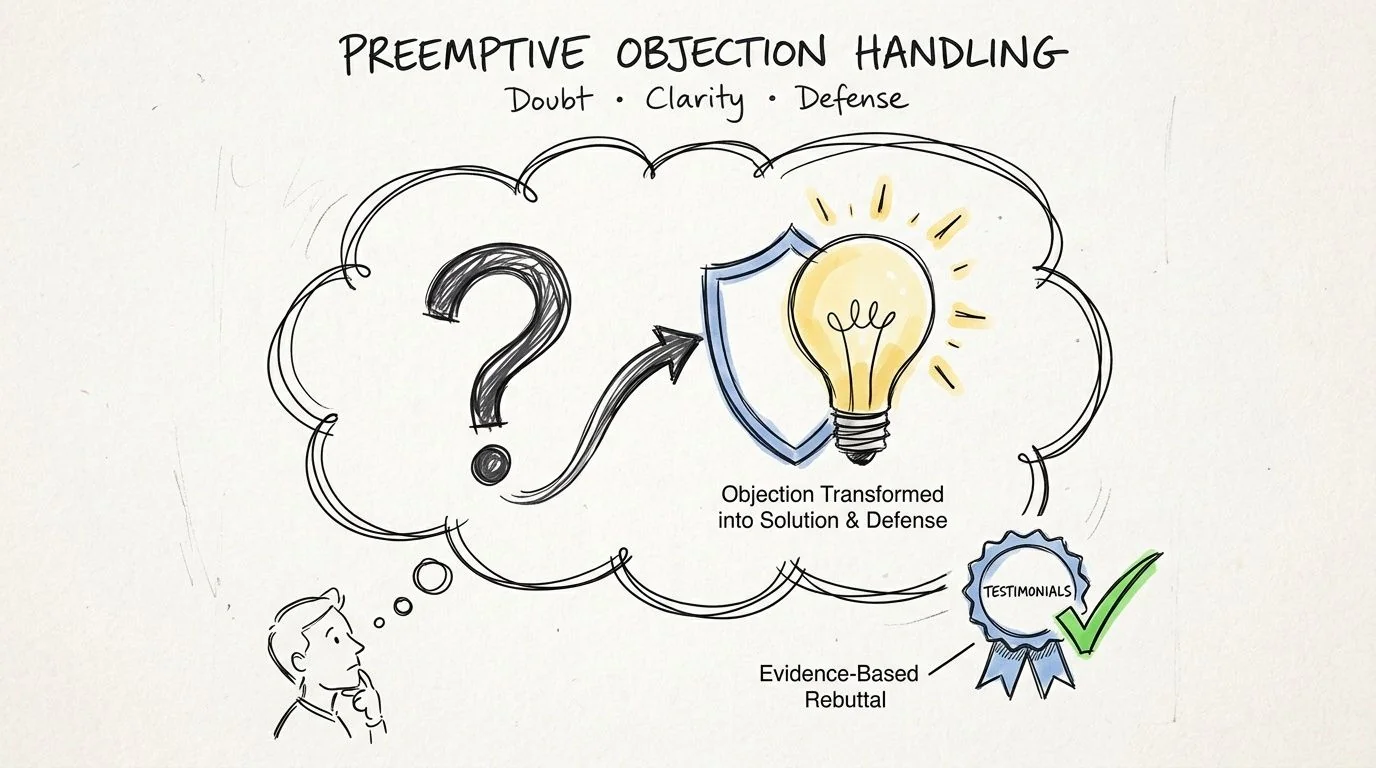
For software agencies, the usual objections are predictable. “We may hire internally.” “We’re not ready to commit to a niche.” “We already tried outbound.” “This sounds useful, but timing is wrong.” Don’t pretend those concerns aren’t there. Write them down and answer them with evidence.
One objection, one answer
A practical format:
Subject: On the niche concern you raised
Hi Tom, You raised a fair concern on the call: picking the wrong niche creates risk if the segment doesn’t convert.
The right answer is validation before commitment, not broad positioning.
100Signals validates niches before activating outbound, and its recognition-first model is built from benchmarks across 1,700+ agencies and 300+ campaigns. That is the right logic for avoiding false starts.
If useful, I can outline the specific tests I’d run before recommending a niche push for your team.
Best, [Name]
Why this matters for competitive positioning
Objections are often proxies for lack of certainty. If your agency can answer the underlying concern crisply, you become easier to defend internally. That matters when the buyer likes you but still has to justify the decision to finance, delivery, or a co-founder.
There’s also a restraint point here. Belkins’ benchmark found spam complaint risk triples after 4 or more emails. That’s why preemptive objection handling works best as a precision move, not part of a pestering spree. You’re removing one blocker with one well-aimed message.
For teams that want stronger live and written rebuttals, this guide on mastering objection handling in sales is a useful complement. It’s worth using to tighten language before your team turns objections into vague reassurance.
The buyer needs a reason they can repeat internally, not reassurance.
A firm building custom enterprise platforms may worry that specialist positioning narrows pipeline. Answer by showing how narrower positioning sharpens authority and follow-up quality. A product engineering shop may fear agency dependence. Answer with scope clarity and a bounded first engagement. Remove the ambiguity, and don’t try to “overcome” objections theatrically.
7. The Multi-Touch Sequence Handoff Follow-Up
Design the sequence before the first send. Day 0 recap plus one committed next step. Day 4 insight. Day 10 proof. Then shift to LinkedIn. Sopro’s 2026 analysis of 126 million outreach emails found most deals require multiple consistent touches before conversion, but each touch must carry new information, not just a nudge to reply.
A single follow-up email is not a strategy. In a high-value B2B sale, it is the handoff into a controlled sequence. If that sequence is not designed before the first post-meeting send, your team starts improvising. Improvisation is expensive. Message quality drops, tone shifts between touches, and by the third email the buyer is reading recycled nudges instead of new reasons to act.
This design exists for one job. Keep momentum without looking desperate.
The cadence that actually makes sense
Use a sequence with defined purpose at each touch. Keep the first email for recap and commitment. Use the second for a specific insight. Use the third for proof. Then change channels.
Belkins, as noted earlier, recommends restraint. Their benchmark found spam complaint risk triples after four or more emails. That is the case against endless follow-up chains. More volume is list fatigue, not persistence.
A practical handoff sequence looks like this:
- Day 0 recap: recap the meeting and lock one next step
- Day 4 insight: send one benchmark, teardown, or market observation
- Day 10 proof: send one relevant case example, result, or authority asset
- After that: shift to LinkedIn or another channel instead of sending a fourth low-value email
Channel shift is easier once the buyer has already seen your name. A profile visit or short LinkedIn note feels lighter than another inbox interruption. It also signals that your process is intentional, not automated noise.
What the first handoff email needs to do
Write the first email as if the prospect will never reopen the thread. Each touch needs its own value and a clear reason to exist.
Example:
Subject: Recap and the first asset I promised
Hi Nina, Good conversation today. You were clear that your team does not need more generic outreach. You need stronger authority in one segment before outbound scales.
I’m attaching the first short asset I mentioned. It outlines where agencies usually lose the buyer before the second conversation.
I’ll send one additional note in a few days with the positioning pattern that tends to fix that. If you’d rather review it live, I can hold time next Wednesday.
Best, [Name]
That email works because it does three things in under 100 words. It proves you listened. It delivers on a promise. It sets expectation for the next touch without sounding like a chase sequence.
For agency founders building repeatable outbound, this guide on email outreach for software development companies is the right internal reference point. It keeps the follow-up sequence tied to positioning and offer clarity, not raw activity count.
The no-decision case needs a different handoff. Glinky’s analysis of meeting follow-up email templates and stalled conversations makes a useful point. Generic samples break down when the prospect is interested but cannot move yet. In that situation, your next touch should add deferred value, such as a short teardown, a timing check tied to a real trigger, or a direct request for feedback. Do not ask, “Just checking in.” Ask a question the buyer can answer internally. That is how a sequence creates pipeline instead of clutter.
Frequently Asked Questions
The first post-meeting email should be under 150 words. Send it the same day, ideally within two hours. Three touches is the right sequence limit before shifting channels. Each touch needs one job: a pain mirror, a useful asset, a proof point, or a concrete next step.
How long should a follow-up email after a meeting be? Keep the first post-meeting email under 150 words. One specific pain mirror, one asset or next step, one call to action. Shorter emails get forwarded more easily. A message a VP can read in 30 seconds and forward to their CTO is more valuable than a comprehensive recap that stays in one inbox.
When should you send a follow-up email after a meeting? The same day. Ideally within two hours of the call. Gong’s analysis of more than 20,000 sales opportunities found that teams following up quickly were far more likely to book a next meeting than those who waited. If the meeting mattered, the follow-up happens before the day ends.
How many follow-up emails should you send after a meeting? Three touches, then shift channels. Belkins’ benchmark data shows spam complaint risk triples after four or more emails. Design your sequence around a day-0 recap, a day-4 insight, and a day-10 proof point, then move to LinkedIn or another channel instead of sending a fourth low-value email.
What should you include in a follow-up email after a meeting with a potential client? Four elements: a specific pain mirror repeating one problem the buyer named during the call, one useful asset (a teardown, benchmark, or case example), one relevant proof point, and one concrete next step. Skip the pleasantries. Your buyer’s inbox is full and their attention is short.
What is the biggest mistake agencies make in follow-up emails after B2B meetings? Treating the follow-up as a courtesy note rather than a sales asset. Generic thank-you emails do not advance deals. Each touch should push one pipeline outcome: reduce perceived risk, confirm buying intent, remove a named objection, or secure a decision. If the email does not do one of those things, it is filler.
Comparison of 7 Post-Meeting Follow-Up Emails
Seven post-meeting email designs, each mapped to a distinct pipeline state. Referral follow-ups generate the highest reply rates (15-25%). Intent-based triggers shorten sales cycles by 30-50%. Next-step proposals increase commitment rates by 25-40%. Sequence handoffs sustain 20-30% response rates across five touches.
| Follow-Up Type | Implementation Complexity | Resource Requirements | Expected Outcomes | Ideal Use Cases | Key Advantages |
|---|---|---|---|---|---|
| The Value-Add Follow-Up with Social Proof | Medium, requires targeted personalization and niche research | Moderate, benchmarks, short case studies, one-pager assets | Higher reply rates (≈8–12%); builds credibility quickly | Post-meeting with niche prospects who value data-driven proof | Provides immediate, tangible evidence and reduces perceived risk |
| The Mutual Connection Referral Follow-Up | Medium, mapping connections and securing consent | Low–Moderate, CRM connection data, coordination with referrer | High reply rates (≈15–25%); faster trust building | CEO/founder outreach and LinkedIn-led introductions | Leverages existing trust to increase responsiveness and referrals |
| The Intent-Based Trigger Follow-Up | High, needs real-time monitoring and fast response | High, intent data tools, alerting, quick-tailored assets | Very high conversion potential; shortens sales cycle 30–50% | Prospects showing buying signals or time-sensitive intent | Captures peak interest with highly relevant, timely outreach |
| The Authority-Reinforcing Content Follow-Up | High, requires original content creation and curation | High, research, authored assets, content bank | Increased replies (≈12–18%) and long-term authority growth | Pre-campaign authority building and recognition-first strategies | Establishes thought leadership and multiplies internal visibility |
| The Specific Next-Step Proposal Follow-Up | Low–Medium, drafting clear options and timing | Low, templates, calendar links, predefined next steps | Increases commitment rates (≈25–40%); reduces back-and-forth | Converting exploratory calls into actionable commitments | Removes ambiguity with concrete options and clear commits |
| The Objection-Addressing Preemptive Follow-Up | Medium, requires buyer profiling and careful wording | Moderate, tailored counterpoints, supporting case studies | Improves replies (≈8–15%); lowers friction on common barriers | High-ticket sales or prospects likely to have strong hesitations | Anticipates and neutralizes objections before they stall progress |
| The Multi-Touch Sequence Handoff Follow-Up | High, sequence design, cadence planning, and testing | High, multiple assets, automation, tracking and personalization | Large lift over time (5-touch ≈20–30% responses across sequence) | Long outbound campaigns and complex buying journeys | Systematizes outreach with varied hooks to sustain engagement |
Outcome ranges reflect practitioner benchmarks and reported campaign data. Results vary based on niche specificity, offer quality, sequence timing, and buyer type.
From Follow-Up to Pipeline Engine
Each follow-up must push one pipeline outcome: increase trust, confirm buying intent, reduce friction, surface objections, or secure a concrete next step. Same-day follow-ups built around recap, value restatement, and next steps improved response rates from 12% to 42%, according to HubSpot data cited by Fellow.
Generic follow-up advice fails in complex B2B sales because it treats every post-meeting email as a courtesy note. That is the wrong job. In an agency sales cycle, each follow-up has to push one pipeline outcome: increase trust, confirm buying intent, reduce friction, surface objections, or secure a concrete next step. That is why these seven designs work better than polite templates. Each one is tied to a specific decision state inside the account.
Analysts at HubSpot, summarized in Fellow’s article on meeting follow-up emails, found response rates improved from 12% to 42% when teams sent same-day follow-ups built around four elements: thanks, recap, value restatement, and next steps. That gap is large enough to change forecast quality, not just email engagement. Agency founders should treat post-meeting follow-up as a controlled system. Budget timing, internal politics, and procurement are outside your control. The clarity, speed, and structure of the first written follow-up are not.
Discipline matters here. Outreach has reported that many sales reps stop after too few attempts, so some opportunities die from weak sequencing rather than real disqualification. More “checking in” emails won’t fix it. A designed sequence will, one where every touch has a reason to exist: a proof point, a referral path, a trigger event, a new asset, a direct ask, or a channel shift.
Software development agencies have a sharper version of this problem. Buyers already have no shortage of technically credible vendors, and that number is growing. AI tools are compressing delivery timelines. Cost arbitrage is eroding. Many enterprise buyers now research and pre-qualify vendors using AI assistants before any first call happens. In that environment, your agency shows up as the obvious choice for a specific domain, or it shows up as one of 1,700 interchangeable options quoting an hourly rate. The follow-up email is often the first moment to make that distinction visible. A strong post-meeting sequence shows how your agency thinks, what domain evidence you can provide, and why your process reduces risk better than the other options on the shortlist.
That is why recognition matters before outreach volume. 100Signals builds around that premise. You get niche validation first, then authority across search, AI assistants, and LinkedIn, and outbound starts once the market can place your firm in a specific category. In that setup, the meeting is evidence that recognition already exists, not the start of awareness. The follow-up email converts that recognition into action.
Use these seven designs as operating assets: one version per niche, short supporting materials, the first email the same day, and one job per touch.
Related on 100Signals
These resources cover the outbound and pipeline systems that make your post-meeting follow-up land in the right context.
- Email Outreach for Software Development Companies: The outbound infrastructure that makes your follow-up sequence part of a coordinated pipeline system, not a standalone email.
- Email Outreach for Consulting Firms: How consulting firms build follow-up sequences that reinforce niche authority rather than compete on price.
- Lead Generation for Software Development Companies: The full-funnel picture of how dev agencies move from cold list to post-meeting pipeline without losing momentum.
- Outbound for IT Companies: Outbound strategy for IT firms where the follow-up email is one piece of a longer, coordinated buying cycle.
- Email Outreach for IT Companies: How IT companies design email sequences that build recognition before the first meeting, so follow-up emails land with context already established.